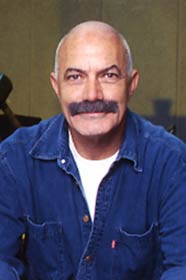
Tribute to Alain Delon at 88th Birthday
A restored version of Luchino Visconti’s 1963 “The Leopard” was shown at the 2010 Cannes Film Fest.

Considered to be Visconti’s most accomplished film, “The Leopard” stars American Burt Lancaster, French Alain Delon, and Italian Claudia Cardinale. The film, which won the top prize, the Palme d’Or at the 1963 Cannes Film Fest, is a must-see for all movie lovers.
It marked the second collaboration of Visconti with Alain Delon, after the 1960’s masterpiece, Rocco and his Brothers (my favorite Visconti and Delon picture).
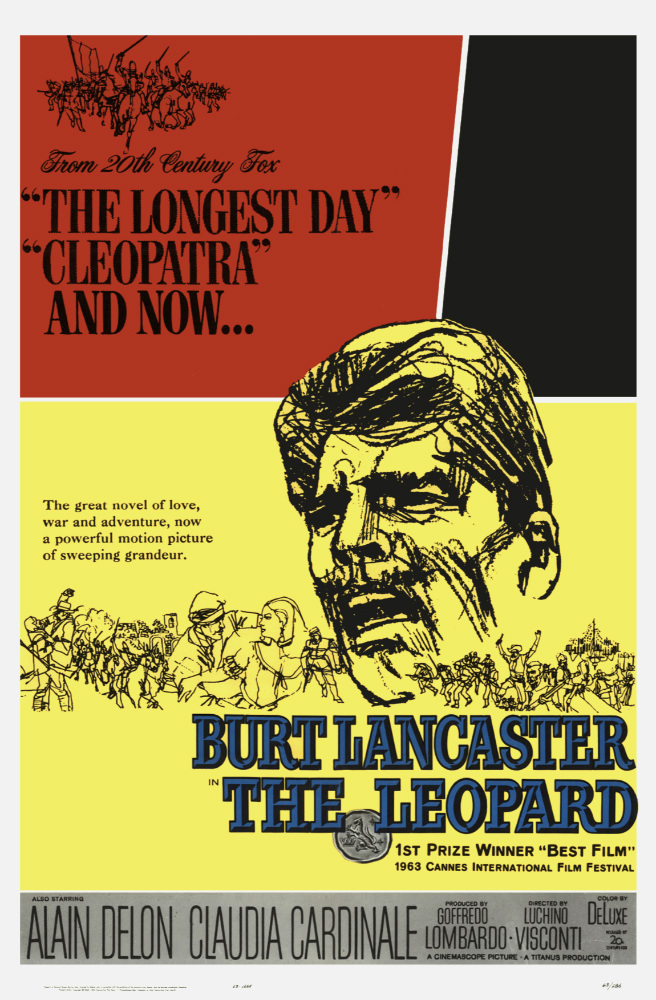
Based on Giuseppe di Lampedusas famous novel, Luchino Visconti’s “The Leopard,” made in 1963, is a masterpiece that gloriously visualizes the mood of melancholy and nostalgia of the passing of an entire age through the decline of one aristocratic Italian clan.
Exquisite from first frame to last, Visconti’s epic deals with the tensions, both internal and external, bearing down on a grand Sicilian family in the late nineteenth century. It is one of the greatest cinematic sagas ever made, a film that has influenced many directors, including Martin Scorsese, specifically in “The Age of Innocence” (1993).
“The Leopard” opens as Garibaldi’s red-shirted volunteers have invaded Sicily in an attempt to annex the island to the Kingdom of Italy. The landed aristocrats, remnants of a feudal era, must now honor their obligations to the Bourbons or come to an accommodation with the victorious middle class.
Don Fabrizio, Prince of Salina (the “leopard” of the title, played brilliantly by Burt Lancaster) represents the old aristocracy, known for its culture, grace, and style. He allows his nephew Tancredi (Alain Delon), an impulsive and calculating but likable youngster, to join the revolutionaries, a decision which eventually associates the Houser of Salin with the victors and ensures their survival in the new order.

While the older aristocratic families struggle to survive, manipulating the course of events, equally self-serving middle-class merchants and liberal politicians emerges to divide the spoils from the political upheaval they have engineered. This class is personified in the film by Don Calogero Sedara (Paolo Stoppa), a comic figure whose power derives from the ecclesiastical properties he had purchased after their confiscation, and whose manners provide the House of Salina with constant source of amusement.
Sentiment and sadness prevail throughout the movie but not in an obvious or melodramatic way. The movie is set within a palace in the stark Sicilian hills on the outskirts of Palermo. There are magnificent tableaux vivants (almost like paintings) of incidents in the baroque life of a noble Sicilian family in the nineteenth century.

The young people are the inheritors of the inevitable changes brought about to the land by Risorgimento of Garibaldi. Visconti captures vividly the autumnal mood of change and decay that the onrush of revolution brought to one family and to the spirits of one man in particular.
Faithful to the spirit of the novel, Visconti’s rendition is not intrusive, and he smartly devotes few scenes to the external politics, such as Garibaldi’s conquests of Sicily, briefly depicted as a combat between the Red Shirts and Bourbons in Palermo‘s narrow streets. Visconti, himself a descendant of aristocracy, suggests in his picture how the Risorgimento freed and elevated the new Italian middle class.
The movie teems with many wonderful sequences and moments. Claudia Cardinale’s entrance in this picture is one of the all-time great character introductions. The great, gaudy end-of-an-era wedding banquet takes up the last 40 minutes of the nearly three-hour saga. This detailed depiction of a ball is deservedly considered to be one of the most celebrated set pieces in film history, emulated by many filmmakers, including Cimino’s “The Deer Hunter,” in which the first 40 minutes depict a wedding.
The critic Noell-Smith has observed that, “There is constant tension in Visconti’s work between an intellectual belief in the cause of progress and an emotional nostalgia for the past world that is being destroyed.” Visconti’s thematic nostalgia finds a stylistic counterpart in his penchant for operatic cinema. (His critical reputation has been firmly based upon his operatic or theatrical productions as well as on his film work.)
Visconti’s 1960s and 1970s films display increasing interest in recreating lavish, carefully designed costumes and period sets, props that are intended to evoke the spirit of vanished eras.
One of the greatest color CinemaScope films ever, “The Leopard” won the top prize at the 1963 Cannes Film Festival. Sumptuously made, the film was shot by ace cinematographer Giuseppe Rotunno and scored by Nino Rota (better known for his work for Fellini).
“The Leopard” was not a commercial success when first released in the US. The film was trimmed by 40 minutes and badly dubbed. In 1983, the film was restored to its original length and theatrically re-released to great critical acclaim and commercial success. (It was released just before the VCR Revolution and benefited from long theatrical runs in many cities).
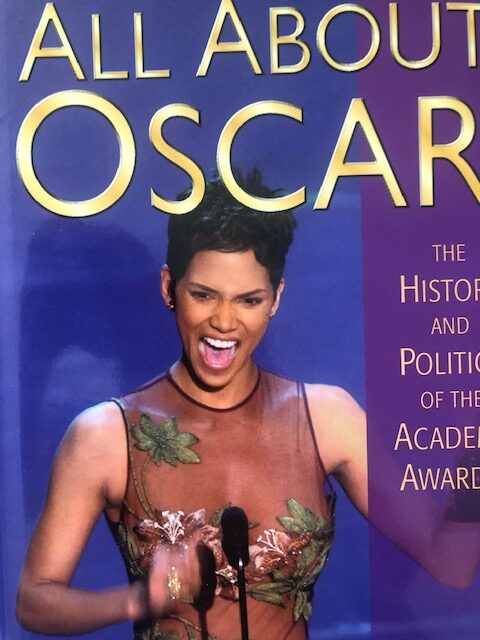
Oscar Alert
“The Leopard” was nominated for one Oscar, costume design for Piero Tosi, but the winner was “Cleopatra.”
Visconti’s Status
Along with Fellini and Antonioni, Visconti was the third contemporary Italian director whose work received wide American and international recognition in the 1960s. In the late 1960s and early 1970s, around “The Damned” and Death in Venice,” Visconti was a staple on university campuses film societies, where young, excitable students engaged in lovely discussions of his (and other auteurs) movies.
As with Antonioni, and later Pasolini and Bertolucci, there are unresolved tensionsin Visconti’s best work between social Marxist perspective and commitment to sheer cinematic aesthetics, the beauty of the image as a legit value in its own right. These creative impulses are further complicated by Visconti’s growing awareness of his homosexuality and the impact of his sexual identity on his films.
Share this: