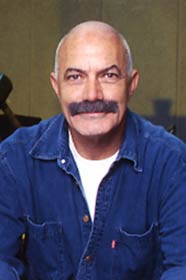
Peter Bogdanovich made his directing debut with Targets, a low budget crime thriller, starring Boris Karloff.
Grade: B- (**1/2* out of *****)
Karloff owed two days’ work to studio head Roger Corman, who allowed Bogdanovich to make any film he liked provided he used Karloff and stayed under budget.
Premise:
Cult actor Boris Karloff, in his last straight dramatic role, plays a semi-autobiographical character.
Named Byron Orlok, he’s an aging, embittered horror movie actor, who abruptly announces his retirement. Orlok considers himself outdated (“I’m a museum piece”), claiming that people are no longer frightened by old-fashioned horror. But after persuasion from young director Sammy Michaels (Bogdanovich), Orlok agrees to make a final in-person appearance at a Reseda drive-in theater.
The character of Bobby Thompson is patterned after Charles Whitman, who committed the horrific 1966 University of Texas tower shooting. Byron Orlok, named after Max Schreck’s vampire Count Orlok in 1922’s Nosferatu, was based on Karloff, with a fictional component of being embittered with the movie business and wanting to retire.
The tale then cuts to Bobby Thompson (Tim O’Kelly), a seemingly clean-cut insurance agent and Vietnam vet living in the San Fernando Valley with his wife and his parents, turns out to be a deeply disturbed and obsessive gun collector.
One morning, after his father leaves for work, Thompson murders his wife, mother, and delivery boy at his home. That afternoon, Thompson continues the killing spree, shooting people in passing cars from atop an oil storage tank.
When the police start chasing, Thompson flees, taking refuge in the same drive-in theater where Orlok is set to appear. Thompson kills the theater’s projectionist and perches himself on the framing inside the screen tower. While the Orlok film is shown, Thompson begins shooting at the patrons in and around the parking lot.
In the climax, Orlok confronts Thompson, who is disoriented by Orlok’s simultaneous appearance before him and on the large screen behind him, allowing the actor to disarm Thompson using his walking cane. The defeated Thompson retreats, and a shaken Orlok remarks, “Is that what I was afraid of?” When police arrive to arrest Thompson, he proudly boasts that he “hardly ever missed.”
What elevates Targets above the status of a low-budget exploitation is Bogdanovich’s skill at visual storytelling, no doubt benefiting from his collaboration with Hungarian-American cinematographer László Kovács, who in the next two years wouls shoot seminal films like Easy Riders and Five Easy Pieces.
Made by a film critic (and fan), Targets is understandably movieish, but there’s also a remarkable attention to details in depicting the tale’s locale.
At the time of its (limited) release, few reviewers noticed the movie’s political overtones, and, unfortunately, its prophetic message about serial killers and “random” violence at schools, churches, and other ordinary locales.
Three years later, Bogdanovich would make his masterful small-town melodrama, The Last Picture Show.
Intertextuality:
Bogdanovich used clips from Corman’s period thriller The Terror, starring Jack Nicholson, Dick Miller and Karloff. A clip of Hawks’ 1931 The Criminal Code featuring Karloff was also used.
Credits:
Directed by Peter Bogdanovich
Produced by Roger Corman, Bogdanovich
Screenplay by Bogdanovich; Samuel Fuller (uncredited), story by Polly Platt, Bogdanovich
Music by Ronald Stein (from The Terror)
Cinematography: László Kovács
Edited by Bogdanovich
Production company: Saticoy Productions
Distributed by Paramount
Release date: August 15, 1968
Running time: 90 minutes