His stunt double, Cliff Booth (Pitt) is the calm, collected, classic car-driving, Hawaiian shirt-donning everyman who has no issue climbing up on the roof to get his hands dirty.
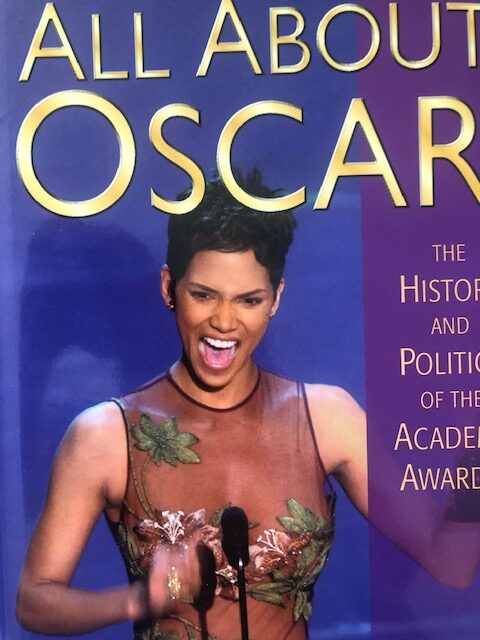
His performance was much-appreciated, as Pitt earned his (long overdue) first Oscar, for Best Supporting Role.
The film also won the Production Design Oscar, and in total was nominated in 10 categories.
When Pitt first meets Pacino’s character in the famous Musso & Frank Grill on Hollywood Boulevard, he’s sitting at the bar in a denim jacket, crunching on a stalk of celery and twirling it through his Bloody Mary, smiling and cool as a cucumber.
That’s a pretty good metaphor for Cliff Booth, who is equal parts suave and badass. Pitt also crosses paths with a stunt coordinator played by Kurt Russell (nice nod to Tarantino’s Death Proof) and somehow ends up fist-fighting Bruce Lee on a studio lot.
Then there’s the storyline featuring Sharon Tate (Robbie) and Charles Manson — and Pitt’s tense visit to the Manson family ranch.
The nearly three-hour flick includes a good old-fashioned brawl and beatdown delivered by Pitt himself — and Leo has several opportunities to wield his flamethrower, which also scares him,
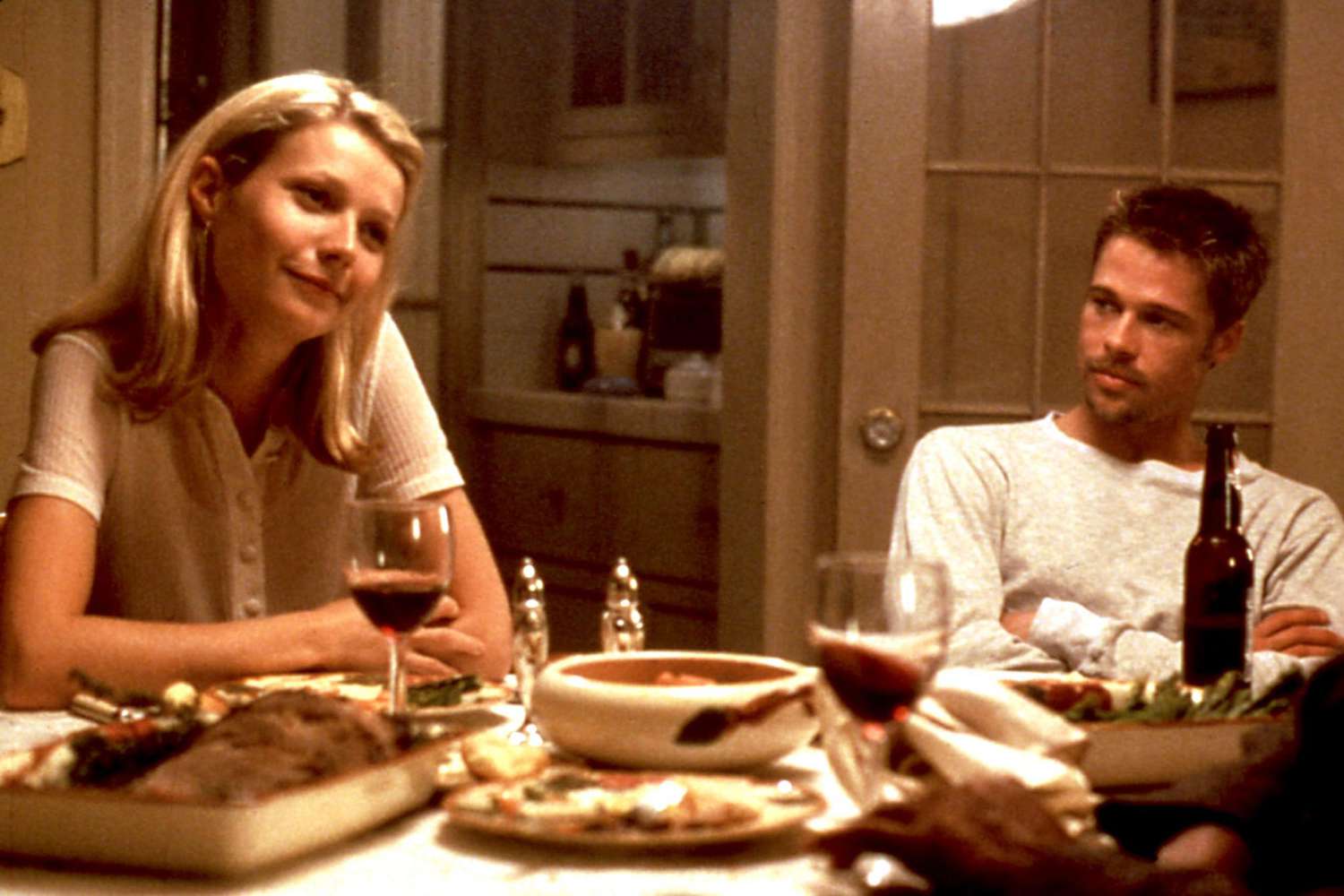
Se7en (1995)
Like Fight Club, Se7en is directed by David Fincher and widely regarded as one of the most intense roles of Pitt’s career. As the story goes, a week outside of retirement, Detective Somerset (Morgan Freeman) is ready to step away from police work. As he’s showing young Detective Mills (Pitt) the ropes as he prepares to escape the chaos, he’s given a unique case as a parting gift: a serial murderer is utilizing the seven deadly sins as a theme in his killings. The murders in the film represent the seven deadly sins as defined by Christianity: gluttony, greed, sloth, lust, pride, envy, and wrath.
The slayings are particularly grisly and not for the faint of heart (though they’re always shown after-the-fact). Take for example, the first victim portrays gluttony: an obese man is force-fed literally to death via hemorrhage. It’s a twisted film that’s somewhat reminiscent of what horror films like Saw would later try to evoke by doubling down on the killer’s perceived sense of justice for his crimes.
Pitt’s performance is powerful in Se7en, notably in the film’s final act, when the killer John Doe (Kevin Spacey) leads the detectives into the desert. They locate a cardboard box with nefarious content, resulting in Pitt’s famed scream, “What’s in the box!?!?”
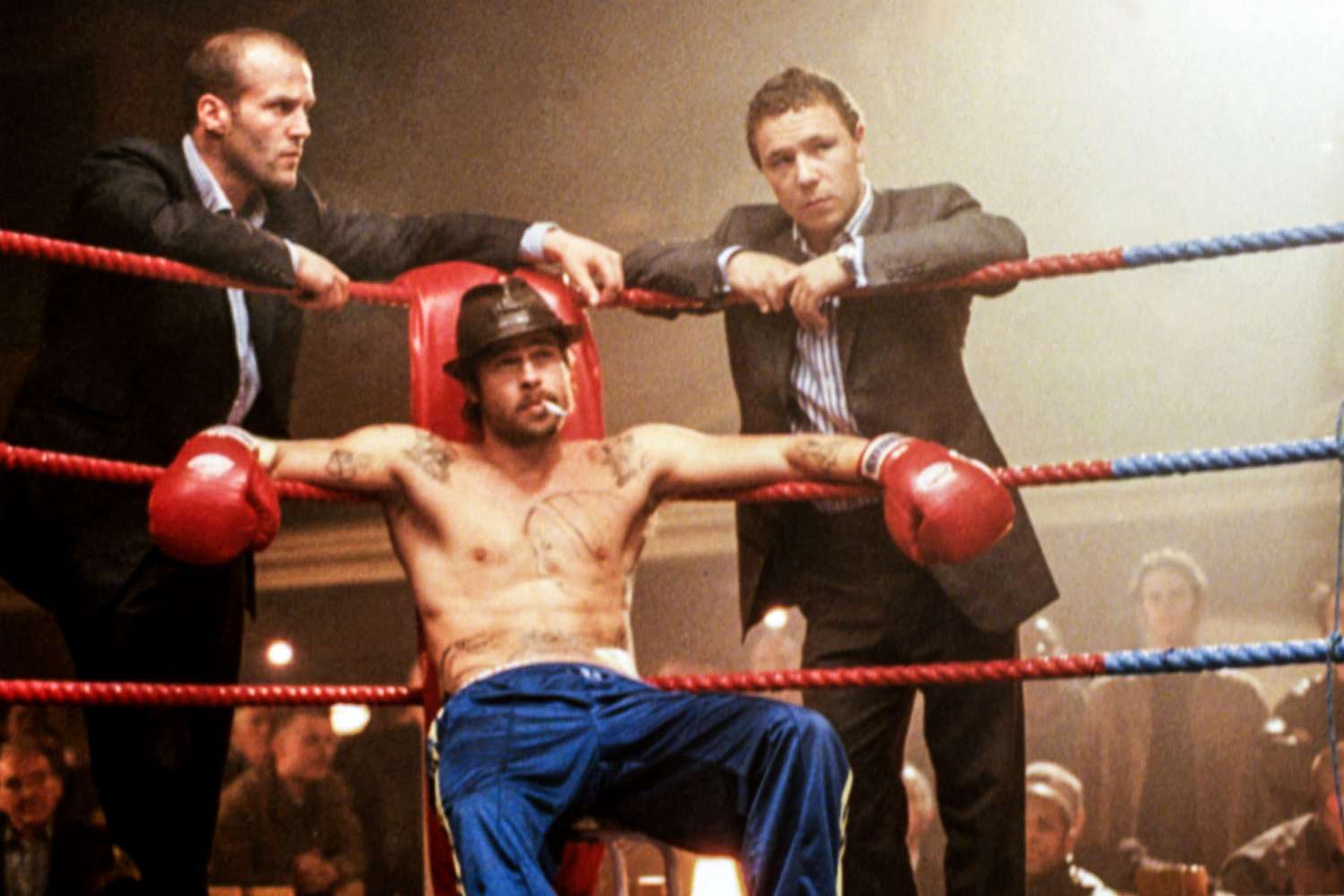
Snatch (2000)
The 2000 Guy Ritchie crime-comedy, Snatch, places Pitt amongst gangsters and thieves, and hooligans played by an all-star cast including Jason Statham, Stephen Graham, Lennie James, Benicio Del Toro, and Dennis Farina.
The tale is set in the world of British organized crime, gambling, and underground boxing.
Pitt plays a grifter named Mickey O’Neil, at the center of the blowback from an 84-karat diamond heist, a series of failed fight setups, and murder by arson.
A troublemaker with the gift of gab, O’Neil exhibits a tattooed torso and penchant for gold jewelry that fit his bare-knuckle boxing champion.
Mickey demonstrates that he’s more than just aesthetic, as he tosses enormous men through wooden gate.
Sporting leather fedora, mustache, and cigarette hanging from his mouth, O’Neil is ready to swindle anyone, making him a thorn for boxing promoters and lowkey criminals Turkish (Statham) and Tommy (Graham).
A brutish warrior who loves his mother, Pitt’s character provides for his family, seeking vengeance when harm is done in his place.

The Curious Case of Benjamin Button (2008)
Perhaps the most peculiar character in Brad Pitt’s filmography is his title role in The Curious Case of Benjamin Button, yet another David Fincher film. Loosely based on a short story written by The Great Gatsby author F. Scott Fitzgerald, the movie was nominated for 13 Academy Awards and took home three Oscars: for makeup, art direction, and visual effects.
Alongside a terrific cast including Cate Blanchett, Taraji P. Henson, Mahershala Ali, and Tilda Swinton, the film tells the story of Button, who is born with the appearance and strength of an elderly man and ultimately ages backwards into infancy. While the story is book-ended by scenes in New Orleans at the onset of Hurricane Katrina (2005), Button’s life journey begins in 1918. Over the years, he navigates his bizarre condition, historical milestones, and romance with his childhood friend and lifelong partner, Daisy (Blanchett).
Pitt’s performance in the movie, coupled with CGI and makeup, makes for a role with a variety of sub-characters built in. Not only did he perform as the same person at different ages, but at each of those ages he was inversely represented physically. The precision and focus to pull off such a premise cannot be overstated.
Aside from the technical acting precision of Pitt, The Curious Case of Benjamin Button is a masterful film because of the universal sentiments it provokes — even through the purview of a character whose life experience is unique and unrelatable. The movie’s issues are abundant: life’s highs and lows, births and deaths, and successes and failures are all demonstrated through Button’s unusual path and the characters he’s met along the way. It’s a tragic yet heartwarming reminder to spend time with those you care for and be present all the while.