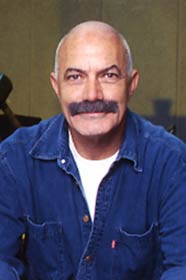
With “In Cold Blood,” author and social celeb Truman Capote created a new literary genre, the “non-fiction novel.” His goal was to bring the strategies and techniques of fiction—artistic selection and the novelist’s eye for telling detail—to the writing of non-fiction. He wanted to show that a factual narrative could be as gripping and as insightful and as entertaining as the fictional thriller.
Grade: A- (**** out of *****)

In his book, he transported the readers to the high plains of western Kansas. “The land is flat, and the views are awesomely extensive; horses, herds of cattle, a white cluster of grain elevators rising as gracefully as Greek temples are visible long before a traveler reaches them.”
By the third page, when four shotgun blasts the prairie silence, the reader is hooked. “The most perfect writer of my generation,” acclaimed writer Norman Mailer had said of Capote.
“In Cold Blood” had a huge influence on other writers. Until its publication, in 1966, writers of talent felt they had to follow in the footsteps of Fitzgerald, Hemingway and Faulkner and write fiction. Non-fiction was deemed the terrain of historians, journalists, and documentarians. Thus, taking risks, Capote opened a new pioneering path in the direction of literary American tradition.

In the decades that followed many of the best writers in America found their subjects in the gritty world of real events. Capote’s influence extends into the twenty-first century, and writers who may never have read “In Cold Blood” write the way they do because of Capote’s style.
In 1967, a year after the book came out, director Richard Brooks (Elmer Gantry) went to Holcomb to make the screen version. Avoiding Hollywood slickness, Brook shot in black and white and cast unknowns Robert Blake and Scott Wilson as Perry Smith and Dick Hickock. However, he did cast one well-known TV and film actor, John Forsythe, (later in
Charlie’s Angels and Dynasty) as Alvin Dewey.

Shooting took place in the Clutter house and other real-life locations. Brooks also filmed 7 of the original jurors, the actual hangman, and Nancy Clutter’s horse, Babe.
Truman arrived during the shoot, attracting enormous attention and press coverage, until Brooks, seeing him as a distraction, asked him to leave. Truman obliged, but not before he posed with Blake and Wilson for the cover of Life magazine.
A great commercial and critical success, the film was nominated for four Academy Awards: Best Director and Best Adapted Screenplay (Brooks), Best Cinematography (Conrad L. Hall), and Best Music (Quincy Jones).

Two drifters, played by Robert Blake and Scott Wilson, murder a Kansas family just for kicks. After severak efforts by the FBI, they are caught, tried and executed. (See detailed synopsis below).
A chillingly effective adaptation of Truman Capote’s celebrated novel, the movie set the standards by which subsequent docudramas would (and should) be made and evaluated.
Although the film is largely faithful to the book, Brooks made some slight alterations, including a fictional character, Jensen, a reporter (played by Paul Stewart).
Narrative Structure
Told through flashback, ex-convicts Perry Smith and Richard “Dick” Hickock meet in rural Kansas in late 1959. Together, they concoct a plan to invade the farm home of the wealthy Clutter family, as its patriarch Herbert Clutter is beleived to be keeping a large supply of cash in a wall safe.
The two criminals break into the family home in the middle of the night but are unable to find any safe; Herbert uses checks for both personal and farm transactions. In order to leave no witnesses to their failed robbery, Smith and Hickock murder the entire Clutter family, cutting Herbert’s throat and shot gunning his wife Bonnie and children Nancy (16) and Kenyon (14). Their bodies are discovered the next day, and investigations by the Finney County Sheriff and Kansas Bureau of Investigation (KBI) are immediately launched.
Based on a tip by Floyd Allen, a former cellmate of Hickock, the two men become the primary suspects for the crime. The pair elude law enforcement by heading to Florida, traveling across the country, and eventually crossing into Mexico. After two weeks there they return to the US broke, and head for Las Vegas, hoping to win money gambling.
Shortly after their arrival, Smith and Hickock are arrested for driving a stolen car, violating parole and passing bad checks.
The Las Vegas Police Department and the KBI later separately interrogate the two men about the Clutter case. Both Smith and Hickock admit to passing bad checks, but deny the murders. The KBI attempts to scare them into confessing, claiming that they left a witness behind who can testify against them, but this attempt fails.
The KBI then confront the two with evidence: photos of bloody footprints matching each of their footwear. Finally, Hickock relents, confessing that he was present, but that Smith carried out the murders. He begs for immunity from the death penalty. After Smith learns that Hickock has cracked, he confesses that he committed all four frenzied killings, but maintains that Hickock was present as active accomplice.
Both Smith and Hickock are charged with first-degree murder, found guilty on all counts, and sentenced to hang. After losing multiple appeals stretching over five years, with two reaching the United States Supreme Court, both men are put to death in front of witnesses as prescribed by law.
In Cold Blood occasionally indulges in naïve psychological terms (and cliches), perhaps in order to make its grim subject more palatable to mainstream audiences.
Earnest and authentic, the movie offers a sobering chronicle of a callous sneseless murder, with not a shred of sentimentaliyty.
Attempting to offer a balanced and scrupulous probing, the movie might have erred in focusing on the killers, and avoiding the spectacle of the actual murders, while dweeling too much on the hangings.
The acting of the duo is so compelling that, ironically, the murderers generate more empathy, while placing the victims in the periphery, denying them a fulkler portraiture.
However, even by today’s standards, the film’s storytelling methods are effective and hauntingly shocking (or shockingly haunting).
Critical Status
In 2008, In Cold Blood was selected for preservation in the United States National Film Registry by the Library of Congress as being “culturally, historically, or aesthetically significant.”
Greetd with largely positive reviews, and blessing of Capote (who liked the movie and wrote about it in various venues), In Cold Blood was quite popular at the box-office. It was released at a time when American viewers were watching night after night the reportage of the bloody Vietnam War (then at its peak).
The movie’s success made Capote’s novel, already a best-seller, all the more popular.
My Oscar Book:
Oscar Nominations: 4
Director: Richard Brooks
Screenplay (Adapted): Richard Brooks
Cinematography: Conrad Hall
Original Music: Quincy Jones
Oscar Awards: None
Oscar Context:
The film was released the same year as “Bonnie and Clyde” and “The Graduate.” It dealt in a more extreme fashion with the issues of rootlessnes and alienation portrayed in those more popular, Oscar-winning movies.
Brooks’ effort failed to received Best Picture nomination because Columbia, which also released “Guess Who’s Coming to Dinner?” put its promotional effort behind that film, under the assumption that it had a better chance at the award than “In Cold Blood.”
Brooks lost the directing Oscar to Mike Nichols, and the writing Oscar to Stirling Silliphant, for “In the Heat of the Night.” Burnett Guffey won for cinematography for “Bonnie and Clyde.” The scoring award went to Elmer Bernstein for “Thoroughly Modern Millie.”
Cast
Robert Blake as Perry Smith
Scott Wilson as Dick Hickock
John Forsythe as Alvin Dewey
Paul Stewart as Jensen, the reporter
Gerald S. O’Loughlin as Harold Nye
Jeff Corey as Walter Hickock, Dick’s father
John Gallaudet as Roy Church
James Flavin as Clarence Duntz
Charles McGraw as Tex Smith, Perry’s father
Will Geer as Prosecuting Attorney
Sammy Thurman as Flo Smith, Perry’s mother
John McLiam as Herbert Clutter
Ruth Storey as Bonnie Clutter
Brenda C. Currin as Nancy Clutter
Paul Hough as Kenyon Clutter
Vaughn Taylor as Good Samaritan
Jim Lantz as Officer Rohleder
Donald Sollars as Clothing Salesman
Sheldon Allman as Reverend Jim Post
Harriet Levitt as Mrs. Hartman
Mary Linda Rapelye as Sue Kidwell
Sadie Truitt and Myrtle Clare, residents of Holcomb, Kansas