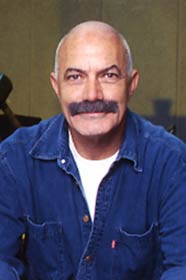
Czech filmmaker Jan Kadar, better known for the 1965 Oscar winning film, The Shop on Main Street, directed The Angel Levine, a faithful (to a fault) adaptation of Bernard Malamud’s short story.
Grade: B- (**1/2* out of *****)
The story was adapted by Emmy-nominated writer Ronald Ribman and Bill Gunn, who had scripted in the same year the superior Hal Ashby’s interracial satire, The Landlord.
A curio item, The Angel Levine hovers between literature and cinema, suffering from a tale that’s replete with racial stereotypes and ethnic clichés.
The movie could only have been made in the 1970s—by the company of Harry Belafonte, who also stars in the titular role, after a decade of absence from the big screen.
Zero Mostel, riding high after the success of “The Producers,” plays a poor Jewish tailor, unable to work due to health problems, and facing financial problems due to the illness of his bed-ridden wife (Ida Kaminska, who was Oscar nominated for the Best Actress for her performance in “The Shop on Main Street”).
The tailor’s faith is challenged when a man calling himself Alexander Levine (Harry Belafonte) comes into his life as a guardian angel. But it’s not easy to make the tailor believe in his mission, even after the angel’s claim that his very wings depend on the tailor’s.
Well-intentioned, no doubt, in its liberal ideology, reflecting the tone of the New American Cinema, the film is nonetheless an artistic misfire, slow-paced, staid, and lacking narrative energy.
The main reason to see this rather listless feature is the acting of the two leads. Zero Mostel, a gifted actor who was blacklisted in the 1950s, made a comeback in the mid-1960s, though he is better known for his stage work, such as the musical Fiddler on the Roof.
The Angel Levine was brought to the screen by Belafonte, who produced the film as his comeback after a decade of absence.
Source Material:
Manischevitz, a tailor, in his fifty-first year suffered many reverses and indignities. Previously a man of comfortable means, he overnight lost all he had.”
Thus begins Bernard Malamud’s “Angel Levine,” the fourth story in The Magic Barrel (1958), his first collection of short fiction. The story was originally published in Commentary (September 1955).
The movie assumes that viewers are familiar with the Jewish tradition. “Angel Levine” has roots in the Hebrew Scriptures. As “The First Seven Years” recalls Jacob’s 14 years of labor to gain Rachel as his bride, so “angel Levine” echoes the tribulations of Job, bewildered over the extent of suffering and grief despite loyalty to God.
Intertextuality:
The plot bears a striking resemblance to Frank Capra’s “It’s a Wonderful Life.”
Though dismissed by critics upon initial release, The Angel Levine has developed a larger following in later years, due to repeat showings on cable and TCM.
Cast
Zero Mostel as Morris Mishkin
Harry Belafonte as Alexander Levine
Ida Kaminska as Fanny Mishkin
Milo O’Shea as Dr. Arnold Berg
Gloria Foster as Sally
Barbara Ann Teer as Welfare Lady
Eli Wallach as Delicatessen Clerk
Anne Jackson as Woman in Delicatessen
Stephen Strimpell as Drugstore Clerk
Sam Raskyn as Druggist
Kathy Shawn as Woman in Drugstore
Credits:
Directed by Ján Kadár
Produced by Harry Belafonte
Screenplay by Bill Gunn, Ronald Ribman, story by Bernard Malamud
Music by Zdeněk Liška
Cinematography Richard C. Kratina
Edited by Carl Lerner
Distributed by United Artists
Release date 1970
Running time 106 minutes
Note:
TCM showed the movie as part of a tribute to Harry Belafonte, on April 8, 2020.