| Metropolitan | |
|---|---|

Theatrical release poster
|
|
Like his fellow indie director Hal Hartley, Stillman has developed a stylized dialogue–there’s a distinct, sort of unnatural cadence to the talk, though it’s perfectly suitable to the social class of his characters.
Also like Hartley, he has situated his films at the intersection of politics and culture, flaunting a strong authorial voice in depicting issues of professional career vs, rmantic love.
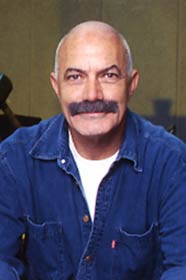
Stillman burst onto the indie scene in 1990 with Metropolitan, a romantic comedy of manners about young Manhattan debutantes who live in elegant Park Avenue apartments.
“Metropolitan” boasts a Preston Sturges sensibility, in sharp contrast to the quirky and offbeat indie movies of the Coen brothers on the one hand and Jim Jarmusch on the other, then in high vogue.
Stillman Inspired by Gallic Eric Rogmer
As the notable Voice critic Andrew Sarris pointed put, Stillman emerged as an American Eric Rohmer, the quintessential New Wave director, making intelligent, dialogue-driven films. Like Rohmer, Stillman’s work depends on language, with humor submerged in the text and played deadpan by the actors.
However, unlike Rohmer, Stillman doesn’t short-change the men as the veteran Frenchman does in his female-themed morality tales. If anything, theremis more or less a balanced view of the genders (even if he’s more comfortable depicting but not privileging the males).
The fast speech and satirical wit betray Stillman’s Harvard education and high-brow sensibility. Among other things, “Metropolitan” makes explicit references to Jane Austen’s “Mansfield Park,” Lionel Trilling’s critique of Austen, and Luis Bunuel’s “The Discreet Charm of the Bourgeoisie.”
In describing his work, Stillman favors to use the term “novelistic” rather than literary, because for him, “literary is a way of treating the material, while novelistic implies that the story is somehow bigger than the vessel you’re putting it into, that there’s more of a world out there than you’re showing or capable of capturing.”
The various vignettes that describe the debutante scene in the holiday season convey the poignancy of the movie’s two levels, the personal and the political, which are interwoven in a complex, if also natural way.
The sense of decline and fall is disguised as a running joke about under-achievers in the upper class, but Metropolitan never loses its sense of anthropological curiosity about preppies as an endangered species.
The WASPish enclaves prevail in the lobbies and ballrooms of the Plaza and St. Regis hotels, in the Protestant cathedrals of the Upper East Side, and in Sally Fowler’s lush apartment. They are an anachronism in a city filled with immigrants and outsiders of every race, nationality and class. Privileged as they are, the characters are presented from the inside, without indulging in the class-bashing that is the norm in most Hollywood movies about the rich and famous.
Charlie Black (Taylor Nichols), who talks social theory and is given to sweeping generalizations, is convinced that his social class is doomed. An overly philosophical but romantically frustrated nerd, he’s contrasted with Nick Smith (Christopher Eigeman), a self-confident dandy.
For dramatic tension, Whutman’s main character is an outsider-preppie, Tom Townsend (Edward Clements), who lives on the Upper West Side with his divorced mother. Though Tom doesn’t approve of the ethos of the clique, he doesn’t hesitate to join their ranks when he’s unexpectedly asked to. Tom eventaully goes back on his principles, but avoiding judgment, Stillman treats him with compassion.
Instead of accepting the love of Audrey (Carolyn Farina), a clear-eyed girl with whom he is intellectually compatible, Tom has a crush on the bubble-headed and flirtatious Selena–until it’s almost too late.
Stillman shows empathy for Audrey’s vulnerability in a scene in which she stands alone abandoned in a large ballroom, a scene that recalls Katharine Hepburn’s isolation when she attends a public ball out of her league in Geoge tevens 1935 Alice Adams.
Once again hitman rekies on cintrasts: The idealism of Tom and Audrey is juxtaposed with the banality and disenchantment of Cynthia and Rick Von Sloneker.
As a comedy of mores about the growing pains of young socialites, Metropolitan came right out of Stillman’s own experience. Stillman had spent many tuxedoed nights on velvet furniture with billowy dressed, white gloved women, talking about a whle rangeof topics like sociology, high literature, and romance.
“The subject for the film just fell into my lap,” said Stillman, whose film career came after years in publishing, journalism and film distribution. “I tried writing about that world in college, trying to be F. Scott Fitzgerald, but it never worked. I was too close to the material.”
With the passage of time and distance, Stillman was ready to approach the subject again: “For 10 years, I was totally estranged and not involved in that scene, so I could go back to it with a humorous take.
Indeed, the more mature Stillman treats the material ironically, poking fun at the obsessions of those years, obsessions that involved being lost in the world of Fitzgerald novels, the sociological theories of Charles Fourier and other French intellectuals, the daydreams of charming socialites.
The movie’s original tag line was: “Doomed. Bourgeois. In Love.” Considered too depressing for a comedy, however, the title was then changed to “a story of the downwardly mobile.” And the ultimate film is still instilled with a subtext of failure and defeat, issues seldom depcited in indies of ths that era.
Stillman’s even invented a acronym, UHB, which stands for Urban Haute Bourgeoisie. A UHBie is not a preppie or a WASP, but a member of a group that because of its specific status has nowhere to go but down. Again, the concept reflects Stillman’s experience: “Before the film, I wasn’t a terrible failure, but I was succeeding O.K, at something I had no identification with at all.” So what’s point?
Stillman had managed to make Metropolitan on a low budget of $230,000 by cajoling friends and relatives to invest money, and then, to save money, shooting in some borrowed apartments that became avalable to him.
Conditions were very different for his second feature, Barcelona, whose $4 million budget was entirely financed by Castle Rock. The film was shot in the exotic, cosmopolitan city of Barcelona, with its broad boulevards, imposing plazas, and the wildly eccentric architecture featuring prominently in the narrative.
Sse Our Review of Barcelona.
Credits:
Directed, written, produced by Whit Stillman
Cinematography John Thomas
Edited by Christopher Tellefsen
Music by Mark Suozzo, Tom Judson
Production: Westerly Films, Allagash Films
Distributed by New Line Cinema
Release dates: Jan 20, 1990 (Sundance); Aug 3, 1990 (US)
Running time: 98 minutes
Budget $225,000
Box office $7 million