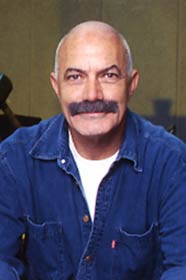
Kazan: Centennial (1909-1999)
This year marks the centenary of the supremely talented, endlessly controversial Elia Kazan, one of the most accomplished American directors of the 1950s. In the next several months, we will evaluate his career and politics and run lengthy reviews, old and new, of each of his pictures.
Born Elia Kazanjoglou, on September 7, 1909 in Constantinople (now Istanbul), he was four when his Greek parents immigrated to the U.S. and settled in New York City, where his father worked as a rug merchant.
After graduating from Williams College, Kazan attended the drama department at Yale and in 1932 joined the Group Theatre as an actor and assistant stage manager. He directed his first play in 1935, and soon became established as one of Broadway’s finest directors with such productions as “The Skin of Our Teeth” (1942), “One Touch of Venus” (1943), “Jacobowsky and the Colonel” (1944), “All My Sons” (1947), “A Streetcar Named Desire” (1947), and “Death of a Salesman” (1949).
He made his last stage appearance as an actor in 1941, and in 1940 and 1941 played supporting roles in two films, “City for Conquest” and “Blues in the Night.” Kazan’s interest in the cinema dates to 1937, when he directed “The People of the Cumberland,” a documentary short about Tennessee miners. After a feature-length docu about food rationing, “It’s Up to You” (1941), made for the US Department of Agriculture, Kazan began directing features films in 1945.
Though his early pictures were solid and were well received by critics and the public, they were too deeply rooted in Kazan’s theatrical background and showed limited use of cinema’s unique properties as a visual medium.
Kaza’s debut film, “A Tree Grows in Brooklyn” (1945), a sensitive adaptation of Betty Smith’s novel, boasted fine performances, including Oscar-winning turns by James Dunn and Peggy Ann Garner. Kazan won the Directing Oscar for “Gentleman’s Agreement” (1947), which was considered at the time a bold indictment of anti-Semitism. However, viewed from today’s perspective, it’s too naïve and simple. “Gentleman’s Agreement” also won the best film Oscar and best supporting actress for Celeste Holm.
Pinky” (1949), an early racial drama about a light-skinned black girl (Jeanne Crain) passing for white, was marked by excellent performances but seems static and tame in retrospect.
“Boomerang” (1947), an obstruction of justice political thriller energized, was energized by a semi-documentary style that indicated Kazan’s growing knowledge of the film medium. “Panic in the Streets” (1950), a taut thriller with a social message that went beyond its plague?scare plot, was shot on location around New Orleans.