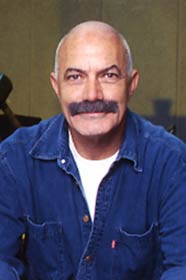
Hal Ashby Career Summation
My Oscar Book
Research in Progress: October 19, 2022
Occupational Inheritance: No
Social Class: father, dairy owner
Family: parents divorce; father committed suicide
Race/Ethnicity: White; Mormon
Nationality: US; Ogden, Utah
Formal Education: No; high school dropout; University of Utah (false press release)
Training: assistant film editor, long apprenticeship; editor of The Loved One, 1965; before assistant editor (sometimes uncredited).
Inspiration: Mentor Norman Jewison (edited and won Oscar for In the Heat of Night)
First Film: The Landlord, 1970; aged 41 (after winning Editing Oscar in 1968; aged 39)
First Oscar Nomination: Coming Home, 1978; aged 49
Gap between First Film and First Nomination: 8 years
Other Nominations: Cannes Film Fest director (3 films there)
Oscar Awards: Actors nominated in his films
Nominations Span: 1966 (editor)–1978 (director)
Genre (specialties): satires
Collaborators:
Last Film: 8 Million Way to Die, 1988; aged 59
Contract:
Career Output: about a dozen as director; some TV
Career Span: as editor, 1965-1986; 23 years;as director, 1970-1986; 16 years
Signature: films about outsiders
Cult Movies: Harold and Maude
Marriage: married and divorced by age 19
Politics:
Death: 1988; aged 59
William Hal Ashby (September 2, 1929–December 27, 1988) was an American film director and editor associated with the New American Cinema.
Oscar Nominations: 3 (1 win for editing)
Before his career as director, Ashby edited films for Norman Jewison, The Russians Are Coming, the Russians Are Coming (1966), which earned Ashby an Oscar nomination for Best Editing, and In the Heat of the Night (1967), which earned him his only Oscar for the same category.
Ashby received a third Oscar nomination as Best Director for Coming Home (1978).
Other films directed by Ashby include The Landlord (1970), Harold and Maude (1971), The Last Detail (1973), Shampoo (1975), Bound for Glory (1976) and Being There (1979).
Born in Ogden, Utah, Ashby grew up in a Mormon household, the son of Eileen Ireta (Hetzler) and James Thomas Ashby, a dairy owner. His tumultuous childhood as part of a dysfunctional family included the divorce of his parents, his father’s suicide, and dropping out of high school.
It’s been falsely stating that he graduated from Utah State University (in Logan, Utah) to ensure he fit into the milieu of college-educated peers like Coppola and Scorsese.
Ashby was married and divorced by the time he was 19.
Ashby moved from Utah to California, where he pursued bohemian lifestyle and ultimately became an assistant film editor through a long apprenticeship.
His career gained momentum when he served as the editor of The Loved One (1965), an adaptation of the Evelyn Waugh novel that involved screenwriter Terry Southern and cinematographer Haskell Wexler.
After being Oscar nominate for Film Editing in 1967 for The Russians Are Coming, the Russians Are Coming, his big break occurred one year later when he won the award for In the Heat of the Night.
Ashby;s editing provided him with the best filmmaking background outside of traditional university study, and he used those techniques when he began directing.
At the urging of mentor Norman Jewison, Ashby directed his first film, The Landlord, about the social dynamics of gentrification in Park Slope, Brooklyn, in 1970.
The filmmaker—who had been marijuana smoker since 1950—embraced hippie lifestyle, adopting vegetarianism and growing his hair long before it became fashionabke,
Over the next 16 years, Ashby directed acclaimed and popular films, many of them about outsiders and adventurers traversing the pathways of life. They included the off-beat romance Harold and Maude (1971), The Last Detail (1973), and the social satire Being There (1979), with Peter Sellers, giving the star a solid role after lapsing into self-parody.
His most significant commercial success was Shampoo (1975), a collaboration with Warren Beatty and Robert Towne that satirized late-1960s sexual and social mores through the life of a hairdresser modeled after contemporaneous figures, Jay Sebring and Jon Peters.
Bound for Glory (1976), a biography of Woody Guthrie starring David Carradine, was the first film to utilize the Steadicam.
Aside from Shampoo, Ashby’s most commercially successful film was the Vietnam War drama Coming Home (1978). Starring Jane Fonda and Jon Voight, both in Oscar-winning performances, it was for this film that Ashby earned his only Best Director Oscar nomination. Coming Home was one of the last films to be modestly-budgeted, socially realistic ethos of the New Hollywood era, earning nearly $15 million in returns on a $3 million budget.
After his critical success and dependable profitability, due to the success of Coming Home, Ashby formed a production company, Northstar, under the auspices of Lorimar.
After Being There, Ashby became more reclusive, often retreating to his home in Malibu Colony, a gated enclave in the city. It was rumored that Ashby had become dependent upon cocaine, a drug that he only used intermittently since the production of Bound for Glory. As a result, he became unemployable.
Eva Gardos, an editor who worked with Ashby, claimed his drug intake was largely confined to marijuana and psilocybin.
Ashby was set to reunite with Sellers and Terry Southern on Grossing Out, a black comedy inspired by the actor’s chance meeting with an international arms dealer on an airplane. Although Southern was rejuvenated by the prospect of working with the duo and produced a script, the project went into development hell after Sellers’ sudden death from heart attack in July 1980.
During this period, the productions of Second-Hand Hearts and Lookin’ to Get Out were plagued by strained relationship between Ashby and Lorimar.
Lookin’ to Get Out, a Las Vegas caper, reunited Ashby with Jon Voight and featured Voight’s young daughter, Angelina Jolie.
Filmed in 1979, Second-Hand Hearts was poorly-reviewed and got limited release in 1981 before being pulled from circulation for thirty years.
Belatedly released in October 1982, Lookin’ to Get Out earned under $1 million in rentals on an estimated $17 million budget.
Lorimar execs grew less tolerant of his increasingly perfectionist production (811,000 feet of film were used shooting Lookin’ to Get Out) and editing techniques; a montage in the latter film set to The Police’s “Message in a Bottle” took 6 months but proved unusable due to a Lorimar agreement with American Federation of Musicians.
Initially set to helm Tootsie (Ashby directed wig and makeup tests) Lorimar execs blocked him from working because preproduction period overlapped with final work on the long-gestating Lookin’ to Get Out, which was eventually recut by the studio when Ashby’s work was unsatisfactory.
Decades later, Ashby’s cut was rediscovered and released on DVD in 2009. As Dustin Hoffman had not “formal committed” to the production at the time of Ashby’s dismissal, the director forfeited his $1.5 million fee.
Lorimar permitted Ashby to film The Rolling Stones’ 1981 American tour docu, Let’s Spend the Night Together; he was longtime fan. He collapsed before the final filmed concert at Sun Devil Stadium in Tempe, Arizona on December 13, 1981.
Jeff Wexler claimed that Ashby was “partying way beyond his capabilities with the Stones.” Caleb Deschanel said that Ashby (who directed the concert shoot on a gurney) had the flu. The film was well-received but enjoyed limited theatrical release.
In September 1983, Ashby directed Solo Trans, a Neil Young concert video that was released the following year.
The Slugger’s Wife, with a script by Neil Simon, was a critical and commercial failure.
Ashby (whose cocaine use accelerated) was fired after delivering 20-minute rough cut of the film’s beginning that included almost no dialogue.
When the Oliver Stone-written 8 Million Ways to Die fared similarly at the box office, Ashby’s post-production process was considered to be a liability and he was fired on the final day of photography.
Ashby stopped using drugs, trimmed his hair and beard, and began to attend Hollywood parties wearing navy blue blazer to suggest that he was once again employable. Despite these efforts, he could only find work as TV director, helming one of three pilots for “Beverly Hills Buntz,” an unsuccessful Hill Street Blues spinoff starring Dennis Franz.
He also directed “Jake’s Journey,” a sword and sorcery fantasy conceived by Graham Chapman.
Warren Beatty advised Ashby to seek medical care after he complained of various ailments, including undiagnosed phlebitis.
He was diagnosed with pancreatic cancer that rapidly spread to his lungs, colon, and liver.
Ashby died on December 27, 1988 at his home in Malibu, California.
Cannes Fest Director
The Last Detail, Bound for Glory, Coming Home, and Being There were all in competition for the Palme d’Or at the Cannes Film Fest.
American songwriter and guitarist Guthrie Thomas, who coordinated the music in Bound for Glory and acted in the film, called Ashby “one of the finest directors of the 20th century.”
For the 2012 Sight & Sound Directors Top Ten poll, Niki Caro, Cyrus Frisch, and Wanuri Kahiu voted for Harold and Maude, with Frisch describing the film as “encouragement to think beyond the obvious!”
A 2018 documentary about the director was screened at the Sundance Film Fest.
The moving image collection of Hal Ashby is held at the Academy Film Archive, with material in the Hal Ashby papers at the Academy’s Margaret Herrick Library.
Filmography: 13 films, 1970-1986
1970: The Landlord, cameo, Groom in opening shot
1971: Harold and Maude; cameo, Man watching model train
1973: The Last Detail, cameo: Man at a bar
1975: Shampoo
1976: Bound for Glory
1978: Coming Home; cameo, Man doing a peace sign
1979: Being There; cameo, Washington Post worker
1981: Second-Hand Hearts
1982: Lookin’ to Get Out; cameo, Man on television
1983: Let’s Spend the Night Together; Concert film
1984: Solo Trans
1985: The Slugger’s Wife
1986: 8 Million Ways to Die
Book about Ashby
Beach, Christopher (2009). The Films of Hal Ashby. Detroit: Wayne State University Press.