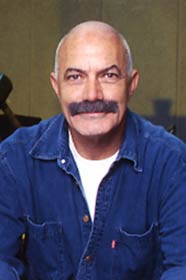
With five films under his belt, Solondz has established himself as our bleakest filmmaker, the chronicler of family malaise and suburban anomie. I have no idea where Solondz is heading, but I know that his next feature will be crucial to his career, after the failure of Storytelling and negative reaction to (and anticipated flop) Palindromes.
Directors: Burnett, Charles, Pioneering African American Director (“Killer of Sheep”)
February 11, 2006 by
The first black director to leave his mark on the new indie cinema was the visionary Burnett. To this day, however, he has not received the recognition he deserved, possibly due to the low-key, understated manner of his work. Burnett made his feature debut in 1973 with Killer of Sheep, but it took 4 years before it was shown publicly. Killer of Sheep is one of two films by black filmmakers (the other is Learning Tree) to be recognized by the Congress National Film Registry Act.
Reichardt, Kelly: Director Profile
February 11, 2006 by
Experimental filmmaker Kelly Reichardt described her 1995 debut, River of Grass, as “a road movie without the road, a love story without the love, a crime story without the crime.” It's an accurate description, for Reichardt evokes the familiar lovers-on-the-run genre, only to stand it on its head with fresh meaning and droll humor. In the process, she confounds predictable formulas, forcing the audience to recognize the banality of her characters.
Rainer, Yvonne: Director Profile
February 11, 2006 by
In her work as a choreographer, Yvonne Rainer pioneered a minimalist style with limited movement and emotion, divesting dance of convention and artifice. Searching for new means of expression, she experimented with the incorporation of film into her dances. Gradually drawn to filmmaking for its own sake, Rainer made her first feature, Lives of Performers, in 1972. Rainer's films are collages of reality and fiction, thought-provoking blends of images and sounds that shun narrative cinema.
Von Scherier Mayer, Daisy: Director Profile (Women in Film)
February 10, 2006 by
The search for modern protagonists motivated female directors to revisit the past as well as the present. Unlike most of Hollywood's Gen-X movies, Daisy von Scherier Mayer's Party Girl (1995) was made by an insider. Mary (Parker Posey) may be considered a modern version of Breakfast in Tiffany's Holly Golightly: By days, she works as a library clerk, by night, she's queen of the club scene. A camp diva blessed with cool deadpan and funkiness, Mary is essentially good girl whose “badness” is a pose. At heart, the movie is an earnest coming-of-age saga: When Mary finally breaks the ancient code of the Dewey Decimal System, it opens her life, she experiences an epiphany. In a flash of inspiration, she arranges the record-album collection of her deejay roommate.