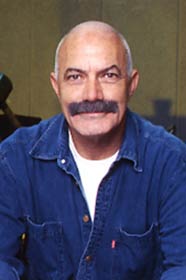
The fiery politics and feverish hysteria of McCarthy era returned with a vengeance in 1998, when the Academy's Board of Governors decided unanimously to award its Honorary Oscar that year to the politically controversial, still unforgiven Elia Kazan for naming names.
Oscar Politics: Filmmakers' Careers
February 1, 2006 by
The Hollywood Ten, a group of directors and screenwriters subpoenaed to appear before the HUAC in 1947 and cited for contempt of Congress because they refused to disclose their political affiliations, included: producerdirector Herbert Biberman, director Edward Dmytryk, producer-writer Adrian Scott, and screenwriters Alvah Bessie, Lester Cole, Ring Lardner Jr., John Howard Lawson, Albert Matz, Samuel Ornitz, and Dalton Trumbo. Tried at a Federal Court in Washington, D.C., in April 1948, they were given the maximum sentence of a year in jail and a fine of $1,000. While blacklisted, some went abroad, others were forced to retire, and still others wrote scripts while using fronts.
Oscar Politics: Larry Parks
February 1, 2006 by
Larry Parks' career reached its zenith with a Best Actor nomination for the title role in The Jolson Story. But his career plummeted when he was forced to admit to past membership in the Communist Party. Officially, Parks was never blacklisted, but Columbia didn't renew his contract and other studios didn't hire him.
Oscar Politics: John Garfield
February 1, 2006 by
For his very first film, Four Daughters, Garfield received a supporting nomination, and a few years later, a lead nomination for Body and Soul. However, in 1952, Garfield's career ended abruptly when he died of a heart attack the night before he was supposed to appear before the Committee.
Oscar Politics: Signoret, Simone–Room at the Top
February 1, 2006 by
McCarthyism damaged the reputation of foreign artists as well. Maurice Chevalier, who was popular in the United States in the 1930s, was refused reentry in 1951, for having signed a Communist-inspired decision, “the Stockholm Appeal,” which called for the banning of all nuclear weapons.